



When shopping for a lab-grown diamond, you're probably familiar with the traditional 4Cs: cut, color, clarity, and carat weight. While these grading factors remain essential, they don't tell the complete story of a lab diamond's appearance.
That's why VeraLume™ goes beyond the traditional grading standards by evaluating characteristics unique to lab-grown diamonds—including Growth Lines. While they're invisible to many buyers at first glance, growth lines can influence how a diamond interacts with light and, ultimately, how beautiful it appears.
Growth lines are internal structural patterns that form naturally during the laboratory growth process. As a diamond crystal develops layer by layer, subtle variations can occur within its crystal structure. These variations may appear as faint linear patterns when viewed under magnification.
.jpg)
Unlike inclusions, which are individual internal characteristics, growth lines are part of the diamond's crystal formation itself. They are unique to lab-grown diamonds and are a direct result of how the diamond was created.
Although they may sound similar, growth lines and inclusions are two different characteristics.
Inclusions are internal features that form within a diamond, such as tiny crystals, feathers, or pinpoint imperfections. They are evaluated as part of a diamond's clarity grade and are found in both natural and lab-grown diamonds.
Growth lines, on the other hand, are not inclusions. They are subtle structural patterns created as a lab-grown diamond forms layer by layer during the growth process. Because they are part of the diamond's crystal structure rather than isolated internal features, they are not reflected in a traditional clarity grade.
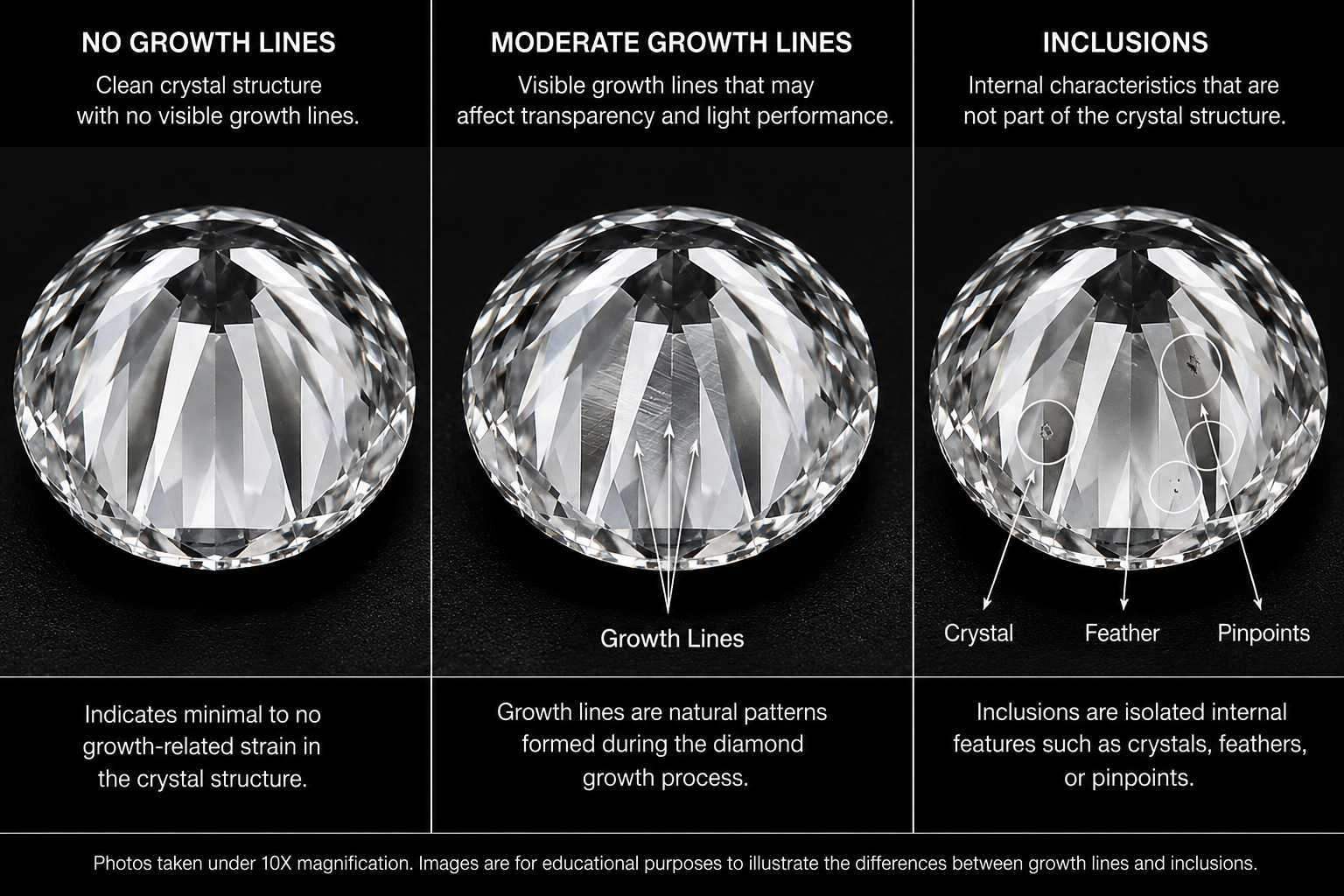
This distinction is important because two lab-grown diamonds with the same clarity grade can still have different growth line characteristics. While both may appear equally "clean" from a clarity standpoint, one may exhibit more noticeable growth lines than the other, which can influence its overall visual appearance.
That's why VeraLume evaluates Growth Lines independently—providing an additional layer of insight beyond what a traditional grading report can offer.
Not all growth lines affect a diamond in the same way. In many cases, they have little to no visible impact. However, more pronounced growth lines can influence how light travels through the diamond, affecting its overall brilliance and transparency.
Traditional grading reports typically don't evaluate growth lines as a standalone characteristic, meaning two diamonds with identical 4Cs could still have noticeably different visual performance.
This is one of the reasons VeraLume includes Growth Lines as part of its comprehensive grading process.
Every VeraLume diamond is carefully assessed for the presence and visibility of growth lines.
Rather than simply noting whether they exist, VeraLume evaluates how noticeable they are and whether they have any meaningful impact on the diamond's appearance. Diamonds with minimal or imperceptible growth lines receive stronger evaluations, while those with more visible structural patterns are graded accordingly.
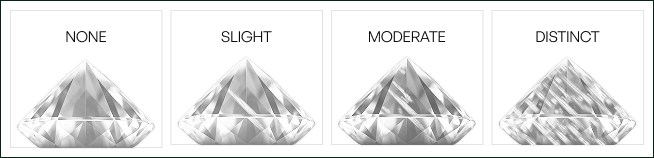
By incorporating this assessment, VeraLume provides a more complete understanding of a lab-grown diamond's overall quality—going beyond what traditional grading reports typically disclose.
Lab-grown diamonds are not all created equally. Even when two diamonds share the same color, clarity, cut, and carat weight, subtle differences in crystal growth can result in differences in beauty.
Understanding growth lines gives shoppers additional insight into why some diamonds appear brighter, cleaner, and more vibrant than others.
With VeraLume, you don't have to rely solely on the 4Cs. Our grading process is designed to evaluate the characteristics that are unique to lab-grown diamonds, helping you choose a diamond based on how it truly looks—not just what appears on a grading report.
Growth lines are just one of the additional factors VeraLume measures to provide a more complete evaluation of lab-grown diamonds. Alongside Visual Performance, Color Tone, and an elevated Cut Grade, Growth Lines help paint a fuller picture of a diamond's beauty and craftsmanship.
By looking beyond traditional grading standards, VeraLume gives you greater confidence that the diamond you choose is exceptional in every way that matters.


